
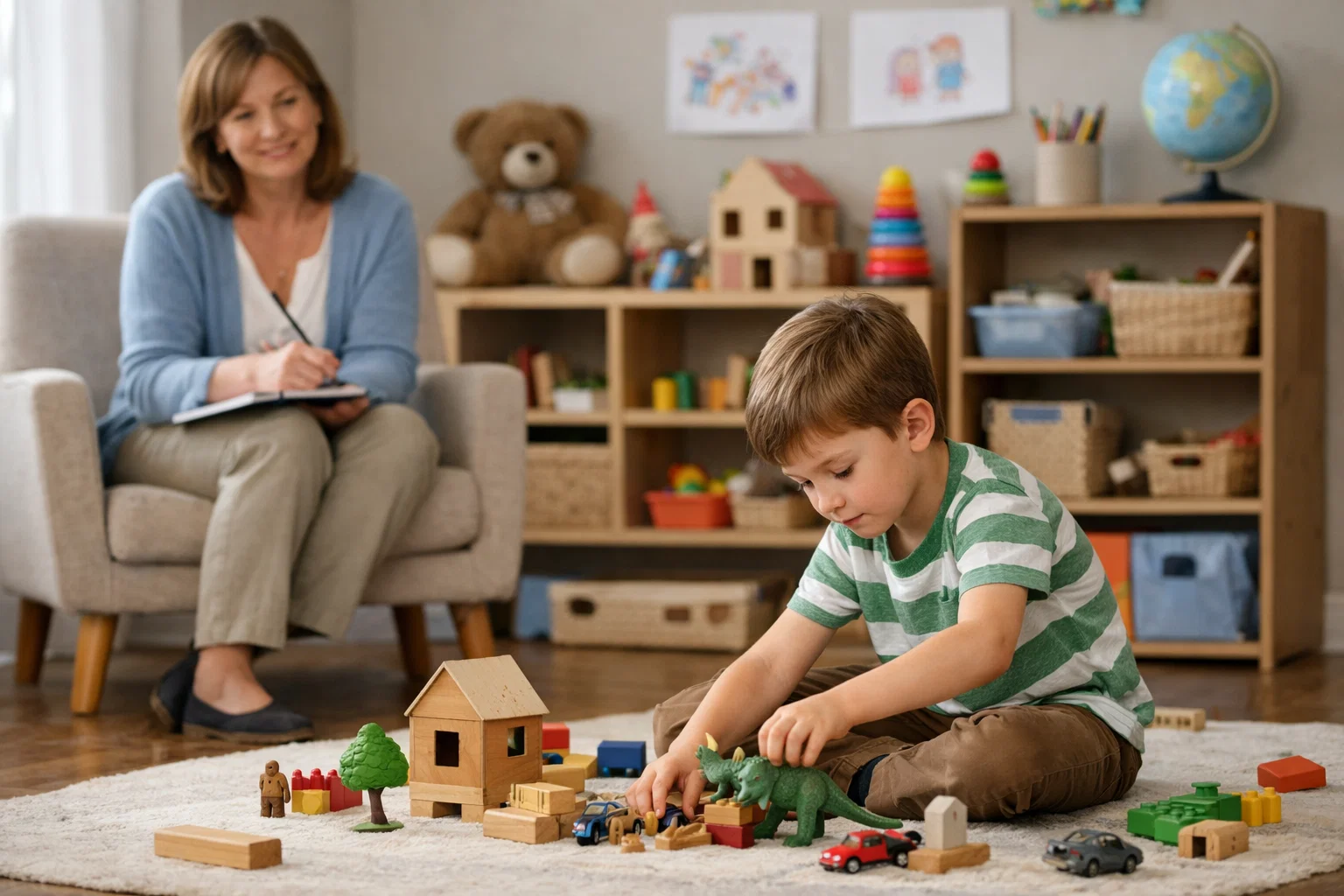
When your child is having a hard time, it can be difficult to know what’s “just a phase” and what might need more support. You might see more meltdowns, school refusal, or tearful bedtimes and find yourself wondering, “Is this normal, or does my child need help?”
Child therapy is a form of mental health support designed specifically for children and the way they see the world. Instead of relying only on talking, it uses play, creativity, and relationships to help kids understand their feelings, work through difficult experiences, and practice healthier ways of coping.
This article will walk you through what child therapy is, what it can help with, what happens in sessions, and how it can support both children and parents in everyday life.
Key Takeaways
- Child therapy is a developmentally appropriate form of counseling that helps children work through emotional, behavioral, and relational challenges in a safe, structured way.
- Therapists use tools like play, art, and storytelling to help children express feelings they may not yet be able to put into words.
- Child therapy can address concerns such as anxiety, school stress, big emotions, family changes, and difficulty with friendships or behavior.
- Many child therapists use relational and attachment-based approaches, including child-centered play therapy and child-parent relational therapy, to support both children and caregivers.
- Parents are usually involved in the process and often learn new ways of understanding children’s behavior and responding to big emotions at home.
Understanding the Basics of Child Therapy

Child therapy is mental health treatment tailored to the way children think, feel, and communicate. While adults usually talk through their experiences, children often express themselves through behavior, play, and body language.
In child-centered therapy, the therapist thoughtfully aligns the process with a child’s developmental stage. This may include:
- Using play, toys, and art as primary ways for children to express themselves, rather than relying on long or abstract conversations
- Keeping language simple, concrete, and emotionally attuned, without over-explaining or directing the child
- Following the child’s pace, especially when exploring sensitive or emotionally meaningful experiences
- Remaining attentive to the therapeutic relationship and the child’s broader relational world, including their connection with caregivers
Many parents find it helpful to think of their child’s behavior as a form of communication. Resources like understanding children’s behavior can make it easier to see outbursts, withdrawal, or clinginess as signals of underlying needs rather than “just bad behavior.”
Approaches such as child-centered play therapy focus on giving children a safe space to lead through play while the therapist follows and reflects what is happening emotionally. In child-parent relational therapy, the relationship between caregiver and child becomes the main focus, with the therapist helping parents respond in ways that build safety and connection.
What Kinds of Concerns Can Child Therapy Help With?

Child therapy can support a wide range of struggles, from everyday stress to more complex emotional or relational challenges. Children might benefit from therapy when they are:
- Experiencing big emotions that feel hard to manage (frequent anger, anxiety, sadness, fear)
- Having ongoing school stress, including test anxiety, performance pressure, or school refusal
- Struggling with friendship issues, bullying, or feeling left out
- Going through major transitions, such as a move, new school, family changes, or divorce
- Showing changes in sleep, appetite, or energy without a clear medical cause
- Acting in ways that seem “out of character,” like regression, aggression, or sudden withdrawal
If you’ve noticed that your child’s emotional reactions feel intense or frequent, you might find how to help a child with big emotions helpful alongside therapy.
For children dealing with change, ideas from supporting children through transitions can also help families adjust routines and expectations in a gentler way.
Child therapy is flexible and can be adapted for neurodivergent children as well. Some therapists incorporate approaches similar to those described in play therapy for autism, where sensory needs, communication styles, and special interests are thoughtfully integrated into the therapeutic process.
How Does Child Therapy Actually Help?
It’s natural to wonder what changes you can realistically hope to see when your child starts therapy. While every child and family is different, child therapy often helps by:
1. Giving Feelings a Safe Place to Go
Children may not have the words to say “I’m anxious about school” or “I’m scared you’ll stop loving me if I make a mistake.” Instead, feelings show up as stomachaches, tantrums, or shutting down.
In child therapy, the therapist helps kids:
- Put language to feelings like worry, anger, shame, and sadness
- Recognize how emotions feel in their bodies
- Notice patterns between triggers (like homework time) and reactions
2. Supporting the Development of Coping Through Play and Relationship
- Child-centered therapy is not only about expressing feelings; it also allows children to gradually develop ways of coping through their own experiences in play and relationship. Children may begin to:
- Discover calming and grounding strategies naturally as they explore feelings and regain a sense of safety
- Experiment with problem-solving in play when challenges arise in relationships with peers
- Practice approaching overwhelming tasks in smaller, more manageable ways as confidence and regulation grow
These skills can be reinforced at home. Many of the ideas in positive discipline for children, such as clear boundaries paired with connection, complement what children learn in therapy.
3. Strengthening the Parent–Child Relationship
In many cases, child therapy helps not just the child but the whole family system. By incorporating elements of child-parent relational therapy, therapists often:
- Help parents understand what their child’s behavior might be communicating
- Offer new ways of responding during moments of conflict or distress
- Support more connection, warmth, and safety in everyday interactions
When children feel understood and supported at home, the gains they make in therapy tend to last longer and go deeper.
What Happens in a Child Therapy Session?
Sessions are intentionally structured yet flexible, allowing the therapist to follow the child’s lead within a consistent and predictable therapeutic framework. A typical child therapy session may include:
- A consistent opening that offers the child simple, predictable choices, supporting a sense of autonomy and safety
- Play or creative activities that are primarily chosen and directed by the child
- Therapist reflections that help name feelings and experiences as they naturally emerge through play
- Opportunities for children to explore regulation or problem-solving through play and relationship, rather than direct skill instruction
- A consistent closing that includes clear time limits and predictable language, helping the child experience continuity and emotional containment
This kind of child-led play is central to many approaches known as play therapy for children. Toys, art, and games are thoughtfully selected to invite expression while creating a sense of safety and familiarity.
In child-centered play therapy, the child leads the play while the therapist follows their story, offering attuned reflections and consistent limits that help the child feel seen, supported, and contained.
Your Role as a Parent in Child Therapy
Parents are an essential part of the process. Even though your child may spend much of their session one-on-one with the therapist, your involvement and insight are crucial.
You might be invited to:
- Share what you notice about your child’s emotions and behavior at home and school
- Learn ways to respond that support both boundaries and connection
- Practice co-regulation tools—staying calm and present while your child is upset
- You may be encouraged to participate in a Child-Parent Relational Therapy Group
Many parents find that as they use the ideas they learn in therapy—and from resources like understanding children’s behavior and how to help a child with big emotions—they start to feel more confident and less alone in navigating hard moments.
Frequently Asked Questions About Child Therapy
Is child therapy only for “serious” problems?
No. Child therapy can be helpful for a wide range of situations—from everyday stress and big emotions to more complex concerns like trauma, grief, or ongoing anxiety. You don’t have to wait until things feel “unmanageable” to reach out.
How long does child therapy usually last?
There’s no one-size-fits-all answer. Some children benefit from a shorter period of therapy to address a specific issue (like a recent transition or mild school anxiety), while others may need longer-term support. Your therapist will discuss goals with you and check in regularly about progress.
Will my child have to talk about everything right away?
No. Many children start by expressing themselves through play, drawing, or stories. As trust grows, they may feel more comfortable sharing details about what’s bothering them. A key part of child therapy is respecting your child’s pace.
Will I know what happens in sessions?
Therapists typically provide general updates and themes rather than a play-by-play of each session, in order to protect your child’s privacy and sense of safety. That said, you can expect to be kept informed about overall goals, progress, and ways you can support your child at home.
Conclusion: Taking a Thoughtful Next Step
If you’ve been wondering whether your child’s big emotions, school struggles, or behavior changes might be more than “just a phase,” you’re not alone—and you’re not overreacting for asking the question. Child therapy is one way to offer your child steady, compassionate support while also giving you tools to better understand and respond to what they’re going through.
If you’d like to learn more about how a relational, attachment-focused practice approaches this work, you can read about the team and values at Revive Relational Therapy, explore their child and family offerings on the services page, and, when it feels right, gently take the next step by booking a session or contacting the practice with your questions.
Reaching out for support doesn’t mean something is wrong with your child—it means you’re willing to bring in help for something that’s simply too big to carry alone.