
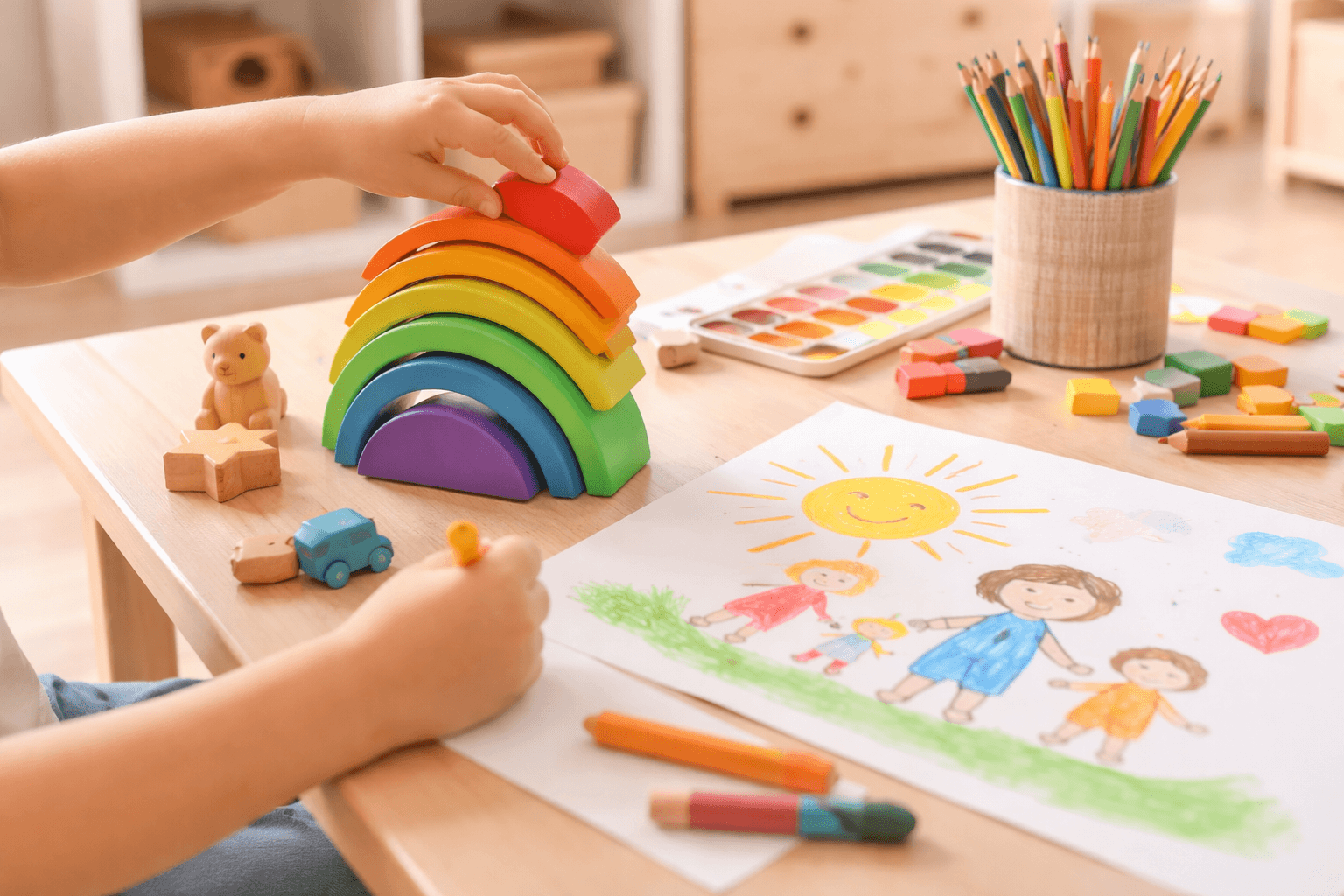
Child-Centered Play Therapy: How Play Helps Kids Grow
Most children don’t walk into a room and say, “I’d like to talk about my anxiety and attachment needs.” They say, “Can I play?”
For kids, play is more than a way to pass the time—it’s how they explore the world, try on different roles, and work through confusing experiences. Child-centered play therapy takes this natural language of play and turns it into a safe, structured way for children to heal, grow, and better understand themselves.
This guide explains what child-centered play therapy is, why play is such a powerful tool for growth, what sessions actually look like, and how parents are part of the process.
Key Takeaways
- Child-centered play therapy is a developmentally appropriate approach where children lead through play and the therapist follows, reflecting feelings and themes.
- Play acts as a “language” that allows kids to express emotions and experiences they may not yet have words for.
- This kind of therapy can help with big emotions, behavior challenges, school stress, friendship issues, and the impact of life transitions.
- Children’s behavior is viewed as communication, aligning with ideas explored in resources like understanding children’s behavior.
- Parents and caregivers are partners in the process, learning how to support emotional growth at home and respond differently during tough moments.
What Is Child-Centered Play Therapy?
In child-centered play therapy, the child is given time, space, and carefully selected toys to express what’s going on inside through play. Instead of directing the session with lots of questions or instructions, the therapist:
- Follows the child’s lead
- Tracks what they’re doing and feeling in play
- Reflects emotions and themes that appear
- Sets gentle limits when needed to keep the space safe
The underlying belief is that children have an inner drive toward growth and healing. When they’re given a safe relationship and room to express themselves freely, they naturally move toward better regulation, understanding, and connection.
This approach fits naturally with the idea that behavior is often a message. Seeing behavior through the lens of understanding children’s behavior helps parents and therapists work together rather than just trying to “stop” the behavior.
Why Play Is So Powerful for Children
Play is not a break from “real work”—in child-centered play therapy, play is the work. It’s how children:
- Make sense of overwhelming events
- Try out new roles and responses
- Rehearse problem-solving and coping skills
- Express feelings they can’t yet name
Through pretend stories, building scenes, and creative expression, children can safely explore things like:
- Fear of separation or change
- Conflict with siblings or peers
- Worries about school or performance
- Jealousy, embarrassment, or shame
- Grief, loss, or confusing adult behavior
For kids who experience especially intense reactions, ideas from how to help a child with big emotions can fit hand-in-hand with what they practice in play therapy.
Play-based therapy can also be adapted for neurodivergent children or those with sensory needs. Some of the flexibility and creativity described in play therapy for autism is often woven into child-centered work to make the space feel more accessible.
What Happens in a Child-Centered Play Therapy Session?
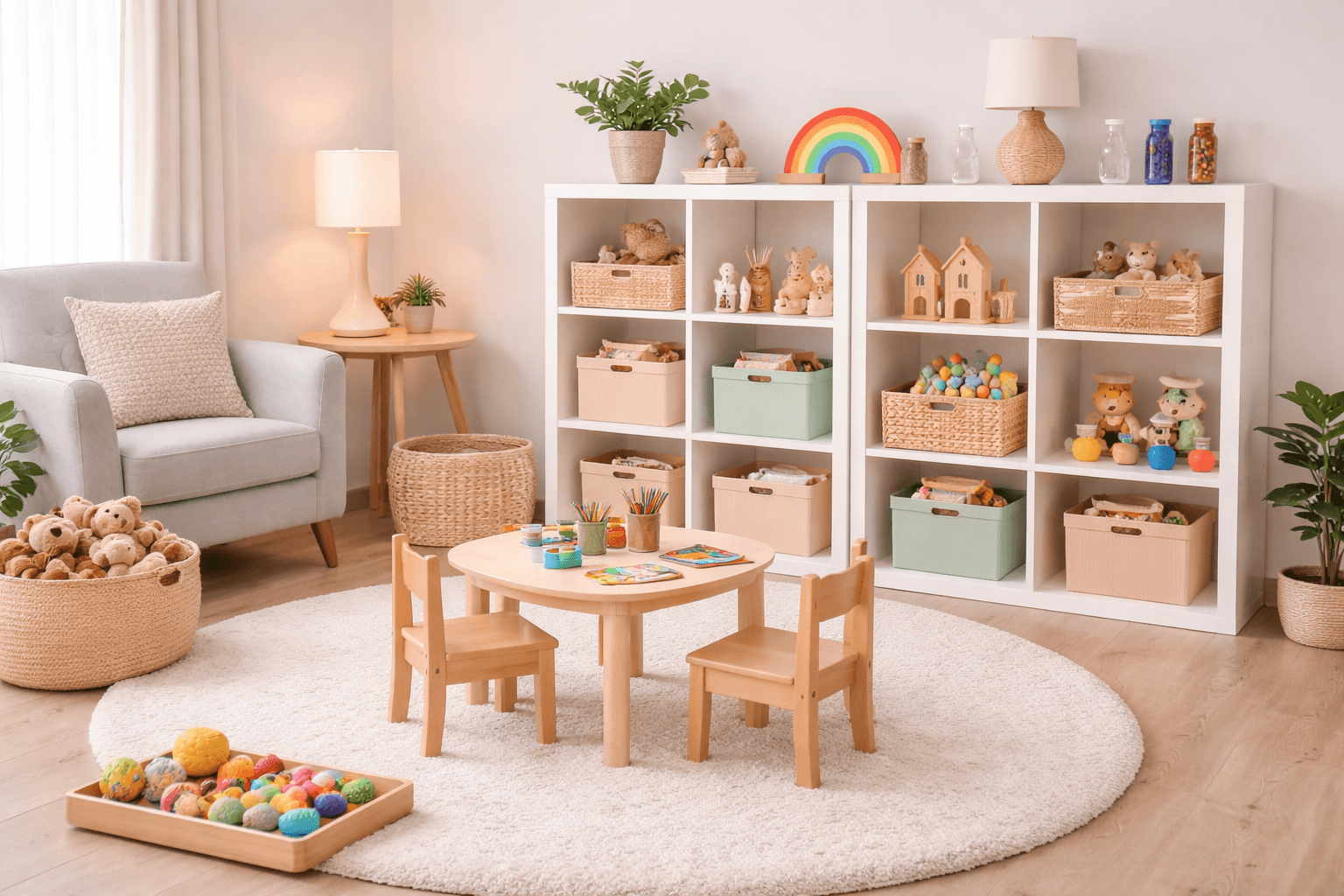
A child-centered play therapy session is structured, but it doesn’t look like a traditional “talk therapy” appointment. While every therapist is different, many sessions include:
- A simple, predictable start
The child arrives and comes into a playroom that has been thoughtfully set up with toys, art supplies, and materials that support expression—things like figures, blocks, puppets, dolls, sand trays, or drawing tools. - Child-led play
The child chooses what to play with and how. The therapist follows, commenting on what they see and reflecting feelings:- “In your game, he looks really worried about what might happen next.”
- “You made sure that character was safe.”
- This mirrors the kind of intentional play described in play therapy for children, where every toy has a purpose in helping children express and organize their inner world.
- Emotional reflection and connection
As the child plays, the therapist gently names emotions, patterns, and shifts:- “First he felt angry, and then he looked really sad.”
- “You wanted to make sure everyone knew the rules this time.”
- Over time, this helps children recognize and accept their own feelings instead of being overwhelmed or ashamed by them.
- Limits when needed
If a child’s play becomes unsafe, the therapist uses calm, clear limits (for example, around hitting, throwing, or breaking objects). This is done in a way that protects safety while still honoring the child’s feelings—a style that lines up well with the spirit of positive discipline for children. - A predictable closing
Sessions often end with a routine that helps the child shift from therapy back to daily life—cleaning up together, choosing a final activity, or doing a brief calming exercise.
How Child-Centered Play Therapy Helps Kids Grow
Children grow in many directions at once—emotionally, socially, cognitively, and relationally. Over time, child-centered play therapy can support growth in several areas.
Emotional Growth
Children gradually learn to:
- Recognize different feelings inside themselves
- Express emotions in ways that are safer and more manageable
- Feel less afraid of their own anger, sadness, or anxiety
This is especially helpful for kids whose emotions feel “too big” and come out through explosive behavior or shutdown.
Behavioral Growth
As children become more aware of what they feel and why, behavior often begins to shift. For example, a child might:
- Have fewer intense outbursts
- Recover more quickly after conflict
- Show more flexibility or problem-solving when something doesn’t go their way
Behavior becomes less about “acting out” and more about communicating needs that can actually be understood and addressed.
Social and Relational Growth
Many children use play therapy to work through painful peer moments, sibling conflict, or worries about caregivers. In the safety of the playroom, they can:
- Revisit experiences of exclusion, teasing, or misunderstanding
- Try out different responses in a pretend setting
- Build trust with a consistent, attuned adult
The relational space of play therapy can support the same kinds of connection and repair that families are encouraged to nurture at home and in approaches like child-parent relational therapy and family therapy.
Coping With Transitions and Stress
Play is also a natural way for children to process transitions—moves, new schools, changes in family structure, or health challenges. If your child is adjusting to change, the ideas in supporting children through transitions complement what they might be working on in the playroom.
Your Role as a Parent in Child-Centered Play Therapy
Even though the child is the one in the playroom, parents and caregivers are a vital part of the process.
Your involvement may include:
- Sharing what you see at home and school, including changes in mood, behavior, and relationships
- Collaborating on goals, such as easing bedtime battles, reducing after-school meltdowns, or helping your child navigate social stress
- Learning about your child’s emotional patterns, and how their behavior might be expressing fear, overwhelm, or need for connection
- Practicing new responses at home, often drawing on ideas that overlap with positive discipline, co-regulation, and supporting big feelings
Many caregivers find that as they learn more about how their child processes emotions and stress, they’re able to stay calmer during tough moments—making it easier for the child to use what they’re learning in therapy.
Frequently Asked Questions About Child-Centered Play Therapy
Is child-centered play therapy only for young children?
It is most often used with younger children, but the principles—following the child’s lead, using creativity, and focusing on emotional safety—can be adapted for older children as well. As kids grow, sessions usually include more conversation alongside play or creative activities.
Does play therapy mean my child won’t talk at all?
Not necessarily. Many children move naturally between play and talking. Some days they may mostly build or act out stories; other days they may want to talk more directly. Child-centered play therapy simply gives them the freedom to use the form of expression that feels safest in the moment.
How long does child-centered play therapy usually take?
There’s no fixed timeline. Some children come for a shorter period to work through a particular stressor; others benefit from longer-term support, especially if there have been multiple transitions or ongoing challenges. Progress is usually reviewed periodically with caregivers.
Will I know what my child is doing in sessions?
Therapists generally share overall themes, shifts they’re noticing, and suggestions for how you can support your child at home. To protect a child’s sense of safety, they may not repeat every detail of what was said or played out, but you should have a clear sense of goals and general progress.
Conclusion: When Play Becomes a Pathway to Healing
For children, play is not a distraction from real life—it’s where real life gets explored, reorganized, and understood. Child-centered play therapy uses that natural language to help kids grow in emotional awareness, coping, and connection, one session at a time.
If you’re curious about whether this kind of play-based therapy might be a good fit for your child, you can learn more about the practice and its relational, attachment-focused approach at Revive Relational Therapy and explore child and family offerings on the services page, including the dedicated child-centered play therapy service. When it feels right, taking a small step to book a session or reach out with questions can simply be a way of giving your child space to work through what’s inside—at their own pace, in the language of play.